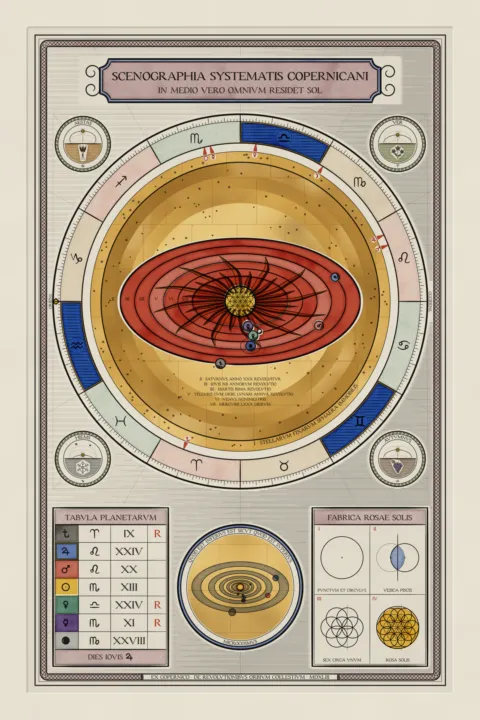
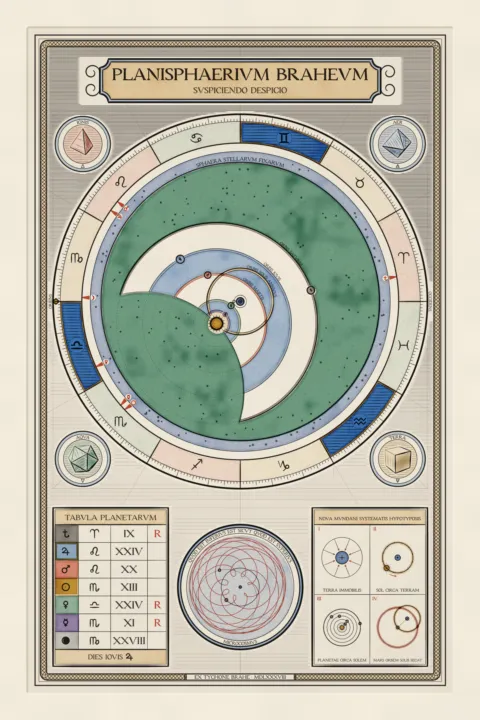
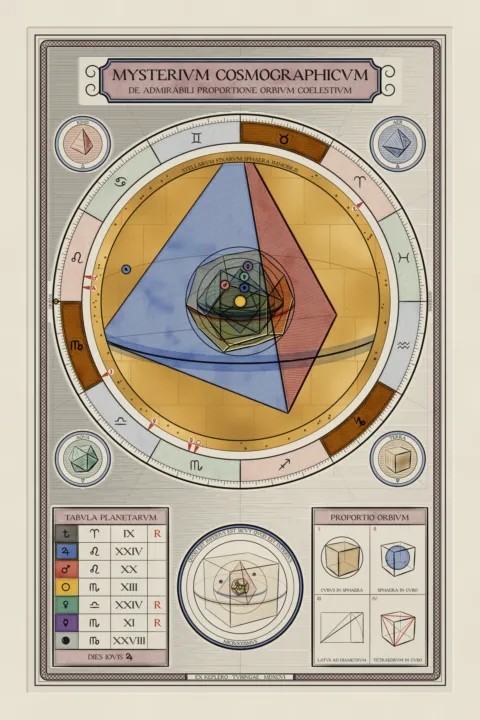
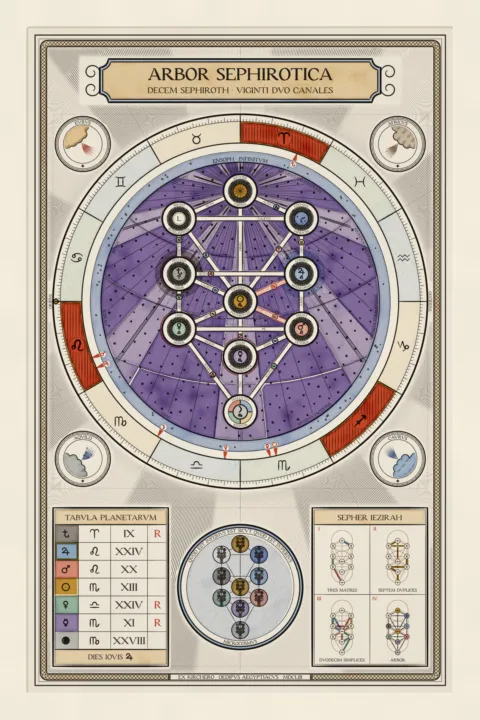
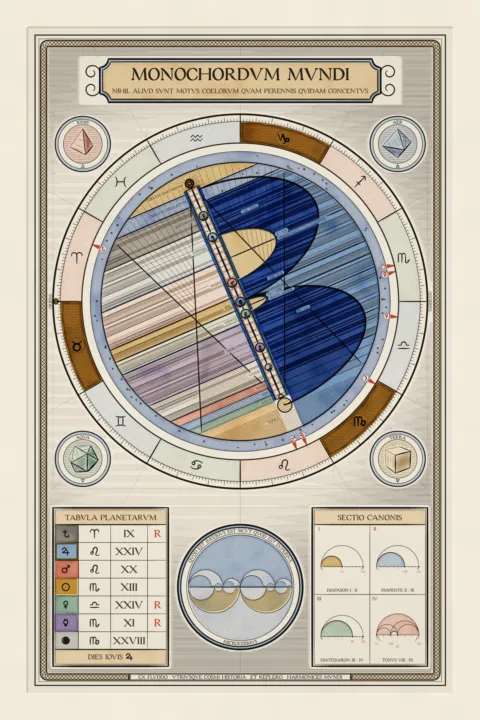
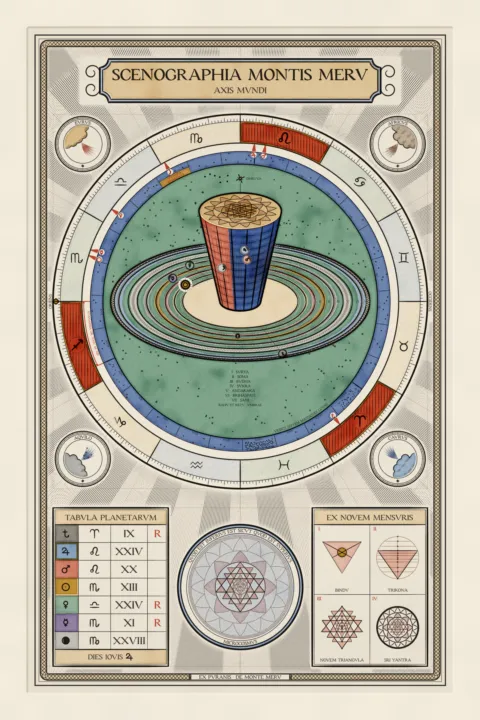
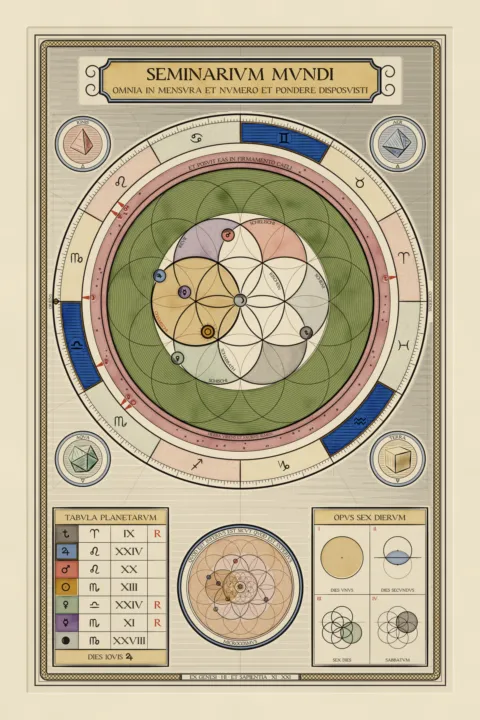
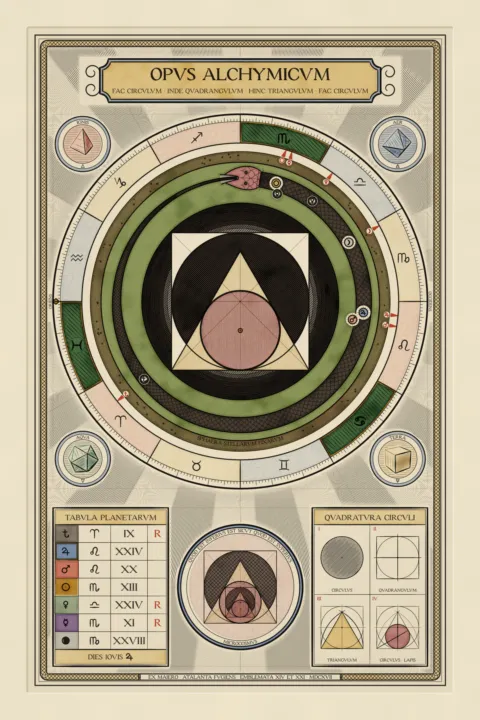
People have always looked up
Albedo, the whitening. The second stage of the Work: the page washed clean, ready for words. For as long as there have been people, they have looked at the night sky and asked what it means. Why does the Moon grow and shrink? Why do a few bright points wander while the others stay put? Does any of it have to do with us?
More than 2,500 years ago, scribes in Babylon watched the sky night after night and wrote down what they saw. They believed the heavens carried messages about life on Earth. People in many other places and times have asked the same questions and drawn their own answers.
Hermes Trismegistus: Hermes the thrice-great. The name means more here than the man, who is a legend. One old answer fits in four words. As above, so below is the short form of a line in the Emerald Tablet, a brief and mysterious text passed down in Arabic and Latin and credited to a legendary sage called Hermes Trismegistus. The tradition that grew up around his name is called Hermetic.
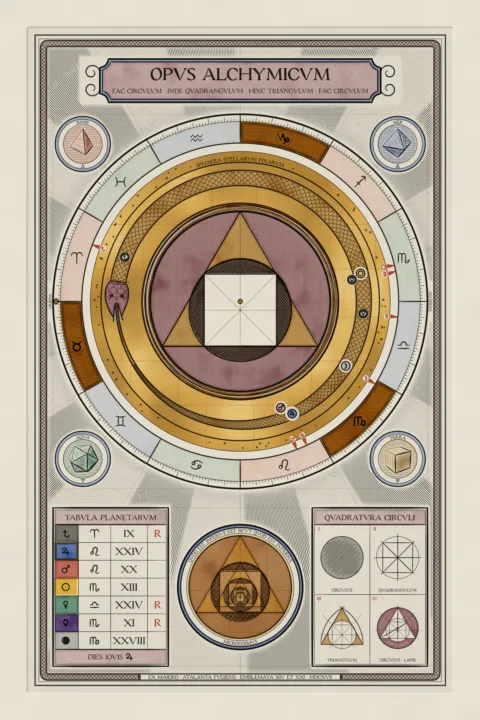
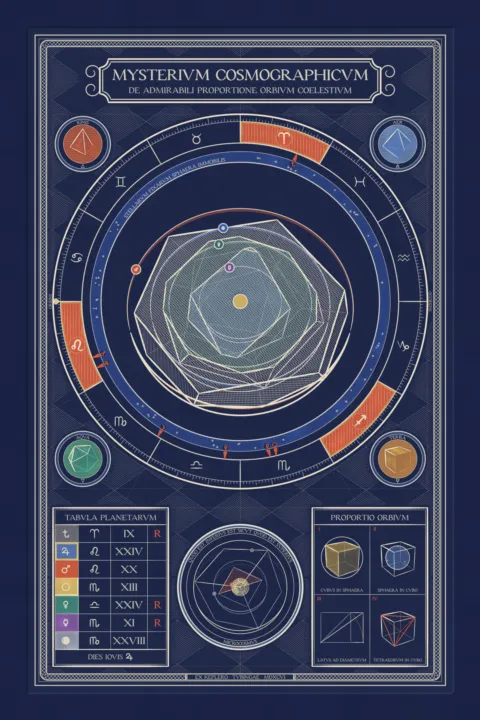
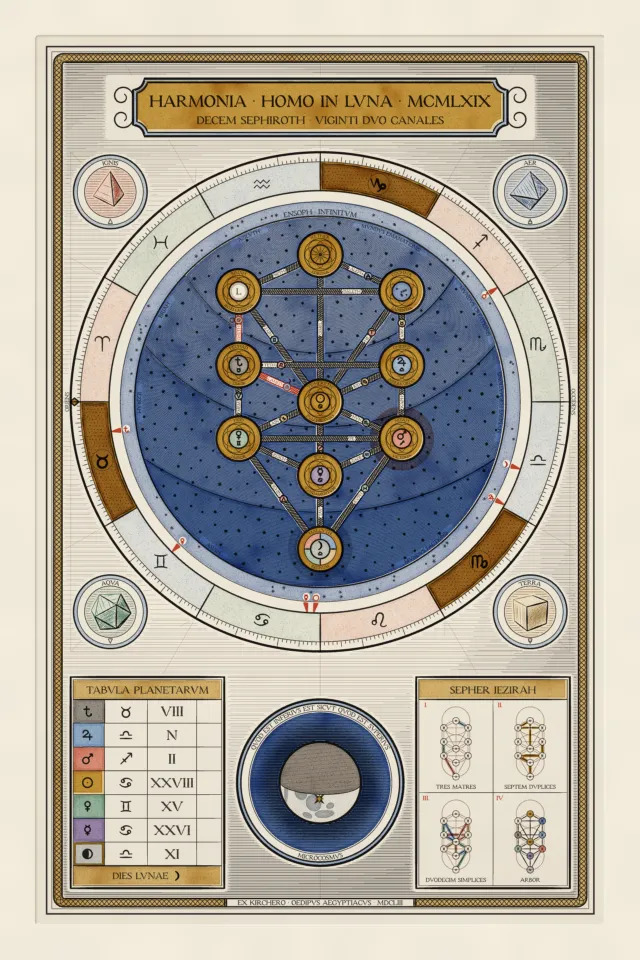
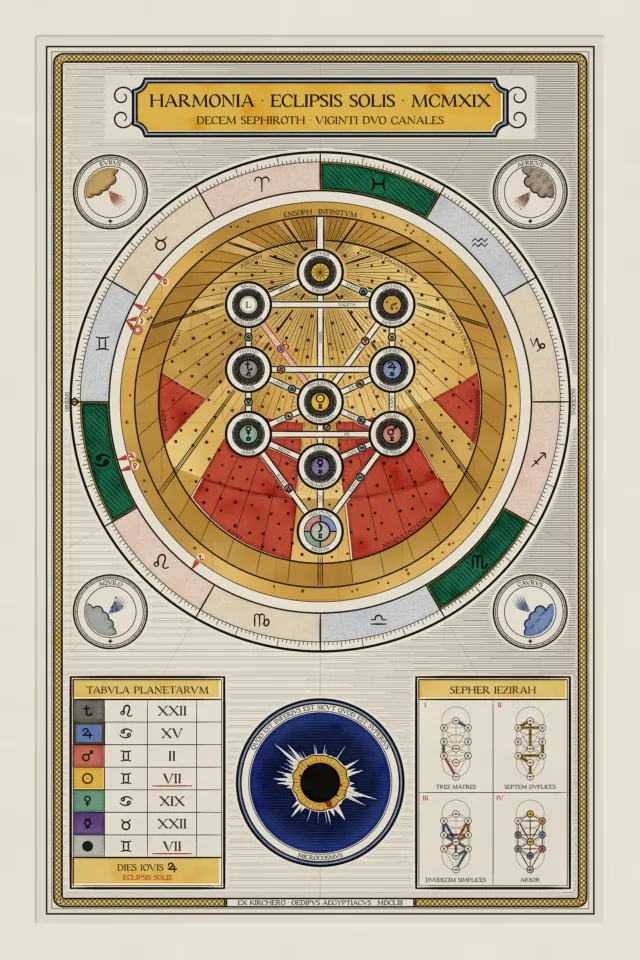
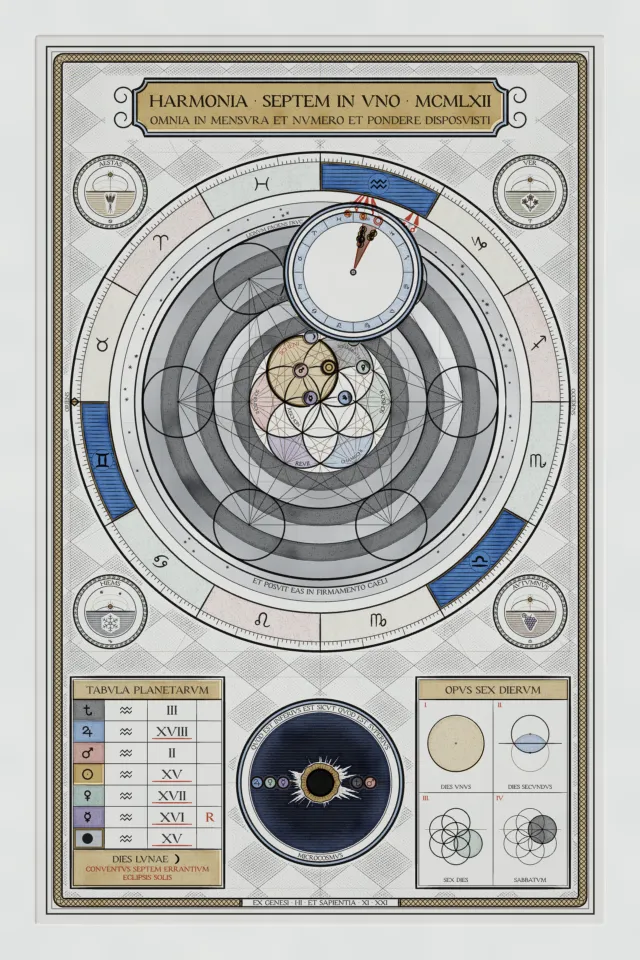
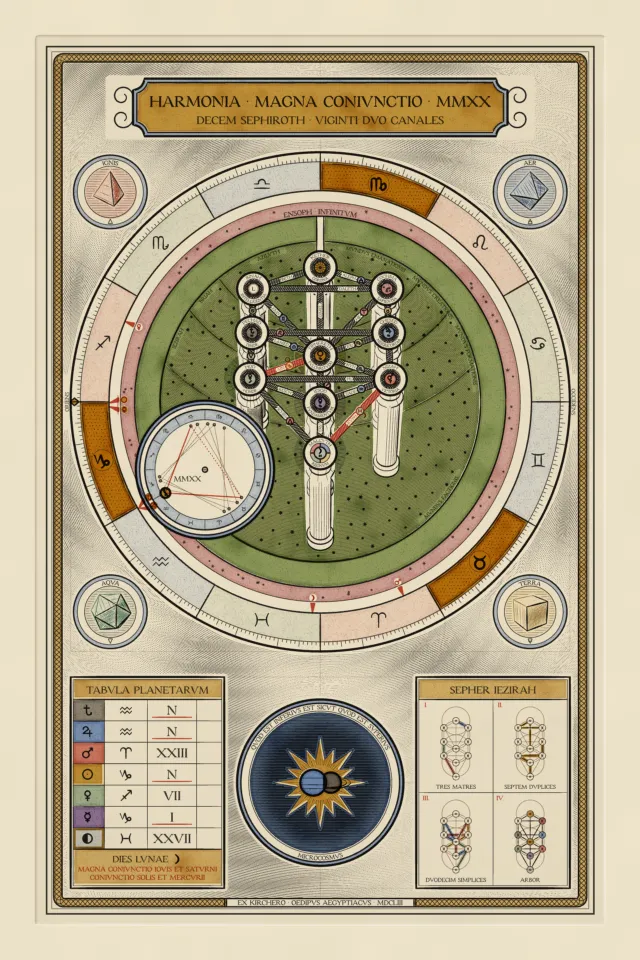
The idea is simple to say. What happens in the heavens and what happens down here are reflections of one another. Those who held it saw the great world and the small world as mirrors of each other, in tune with one another. That is where this collection gets its name: Harmonia Caelestis means Celestial Harmony.
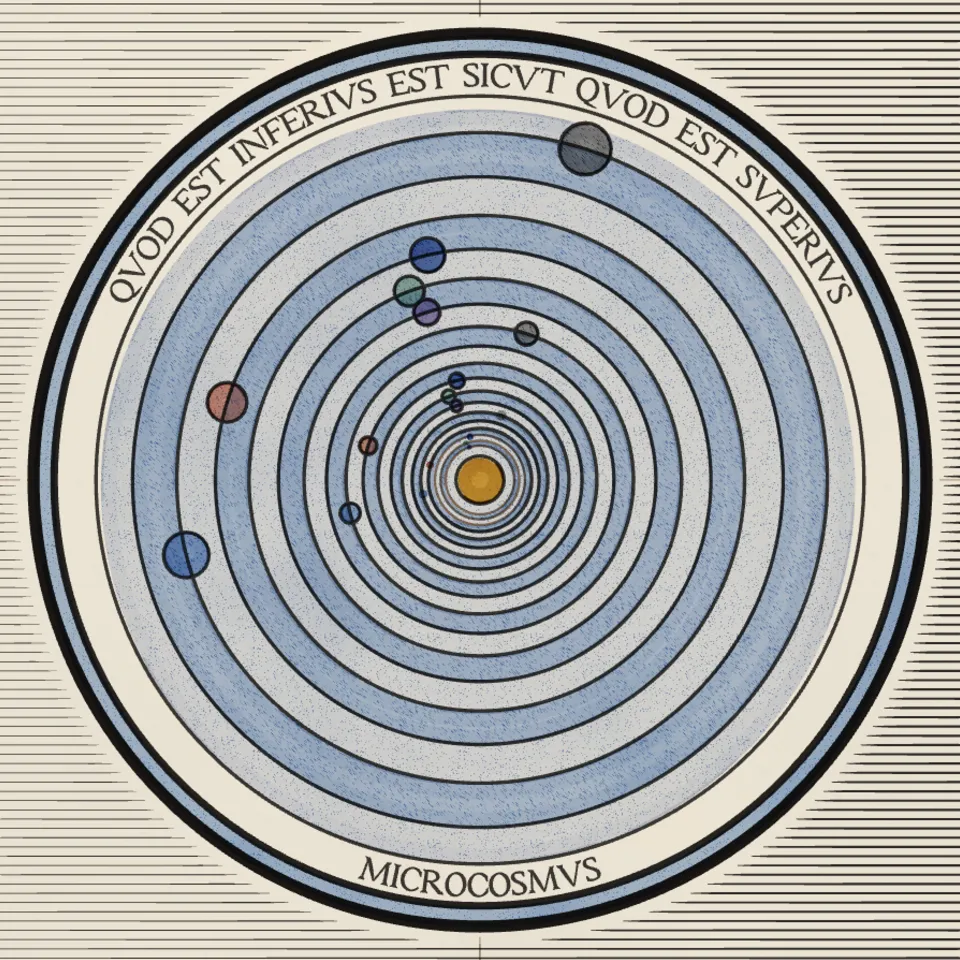
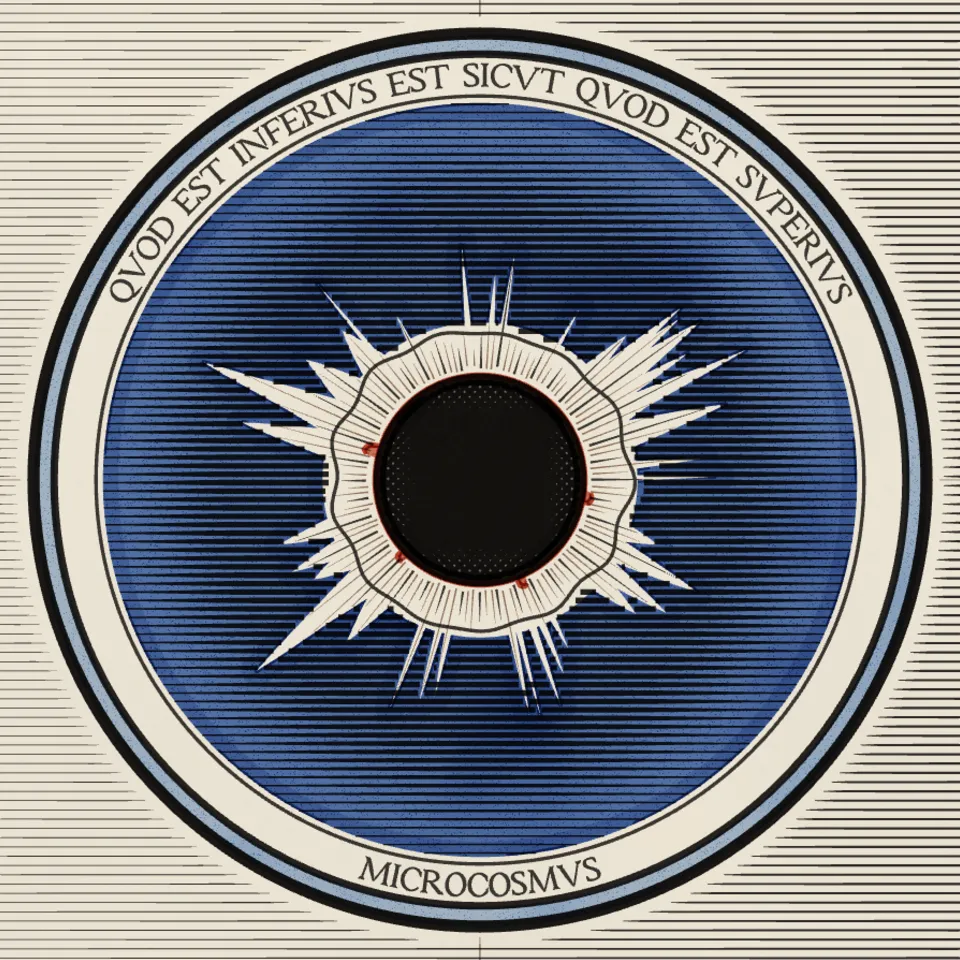
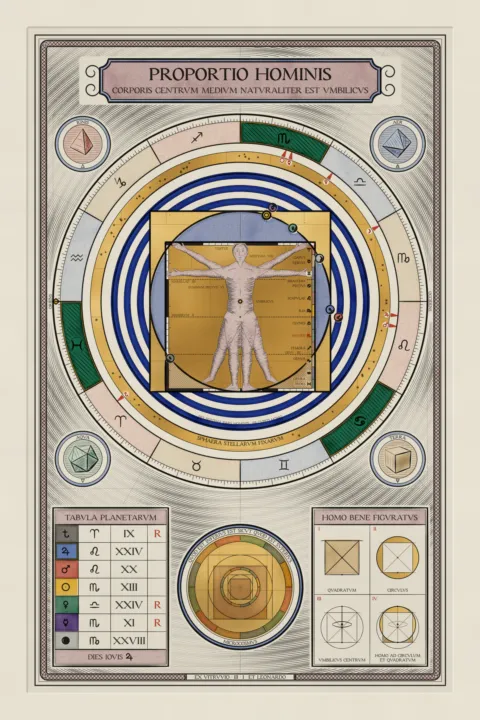
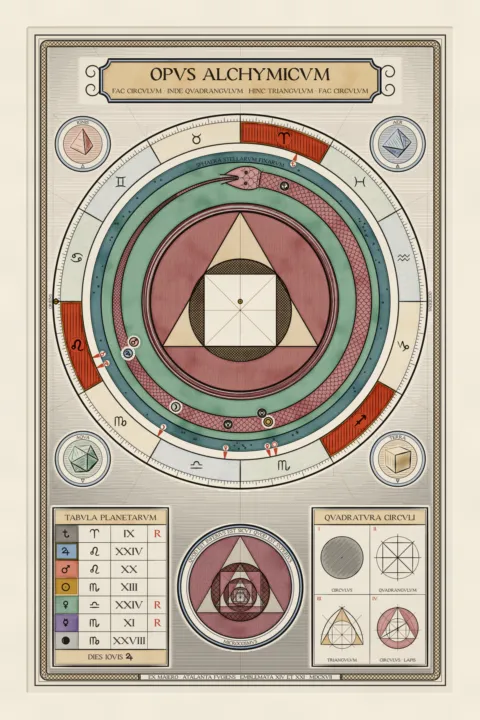
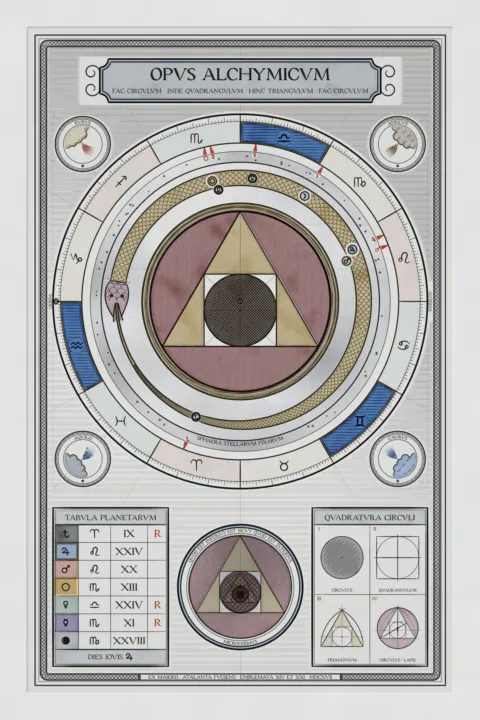
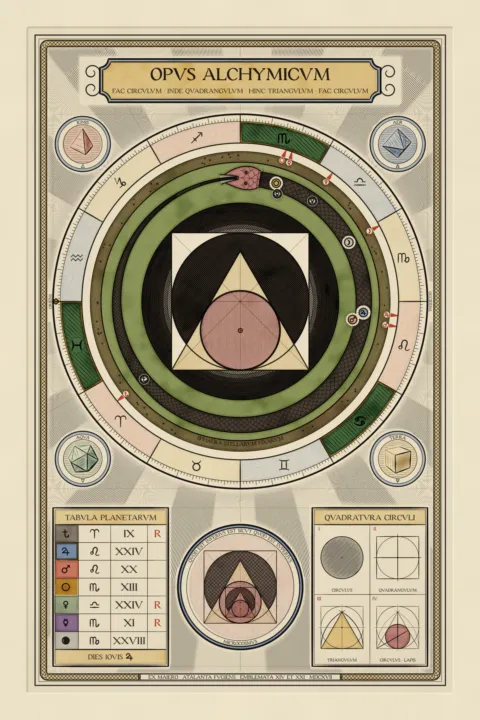
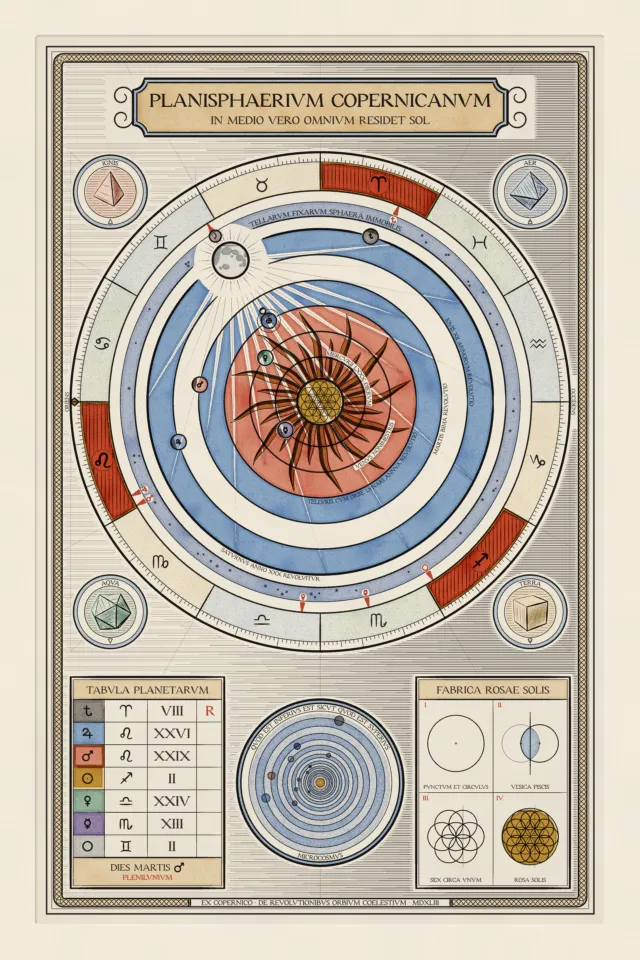
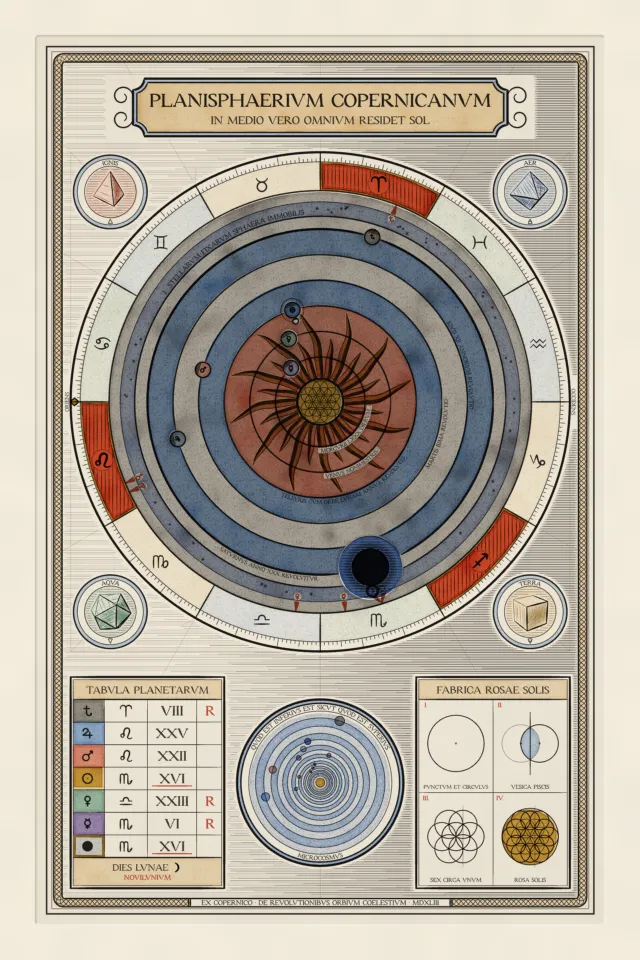
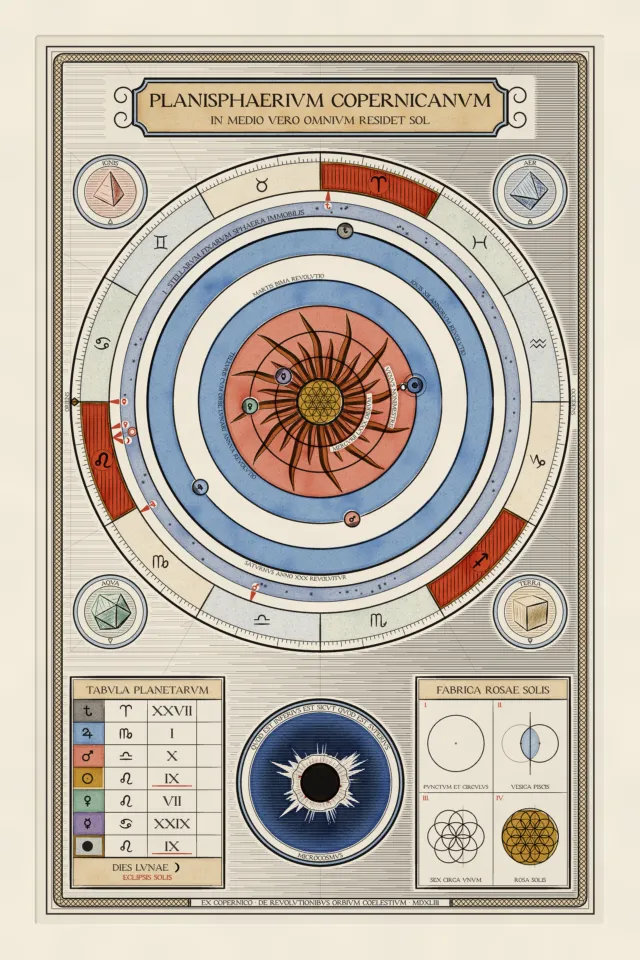
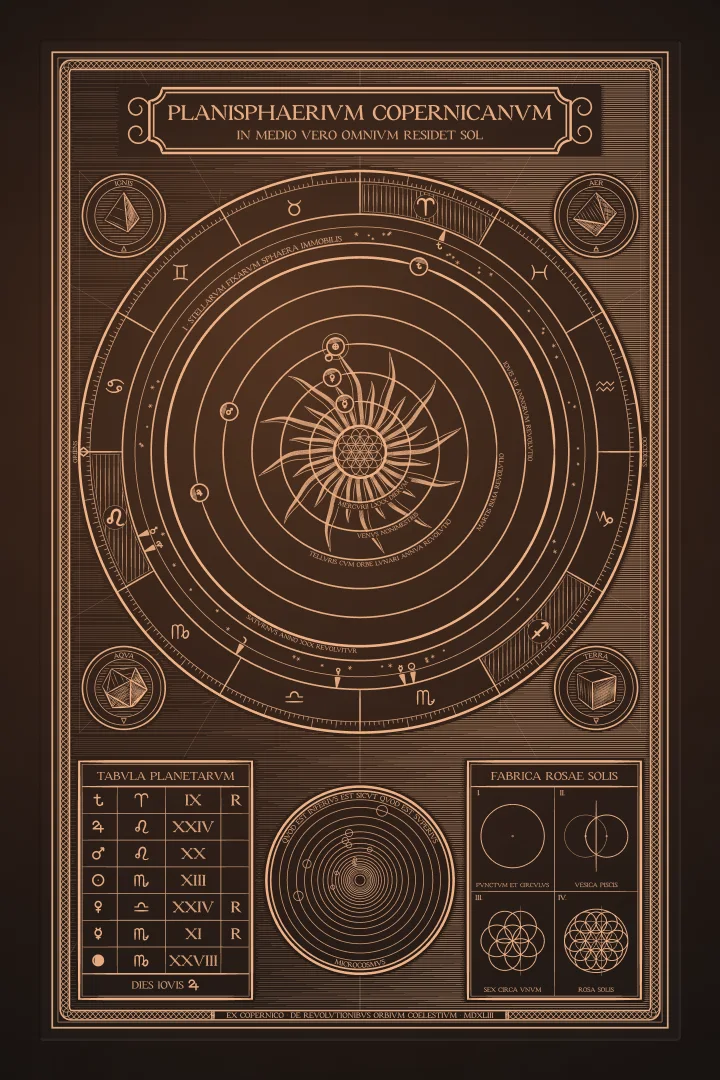
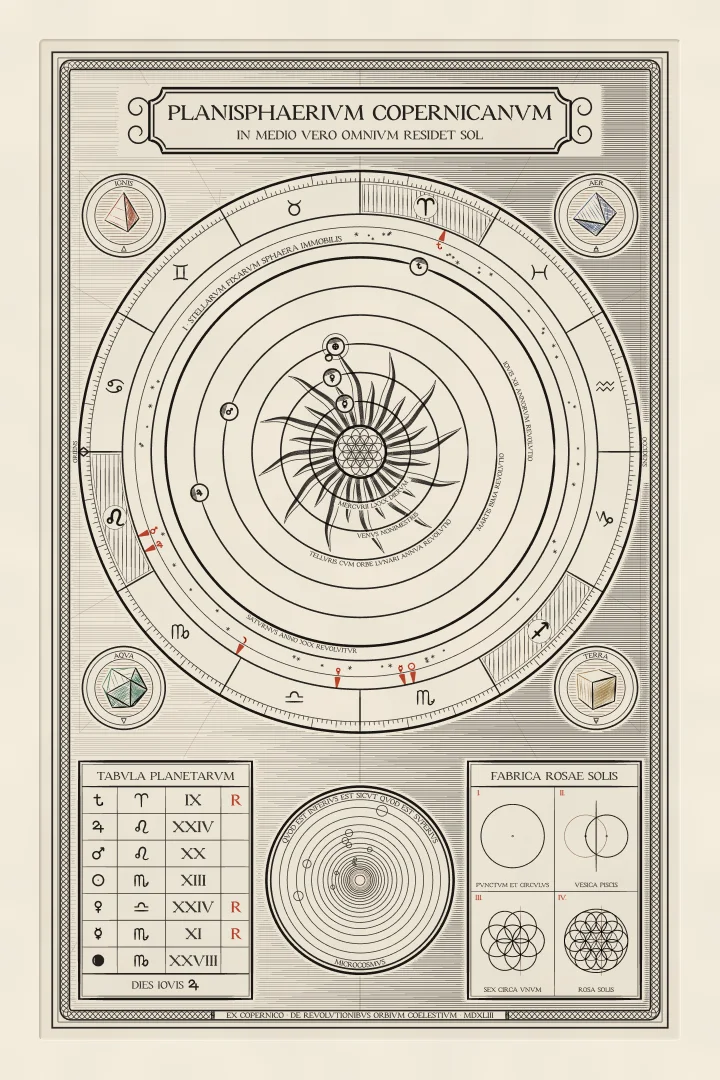
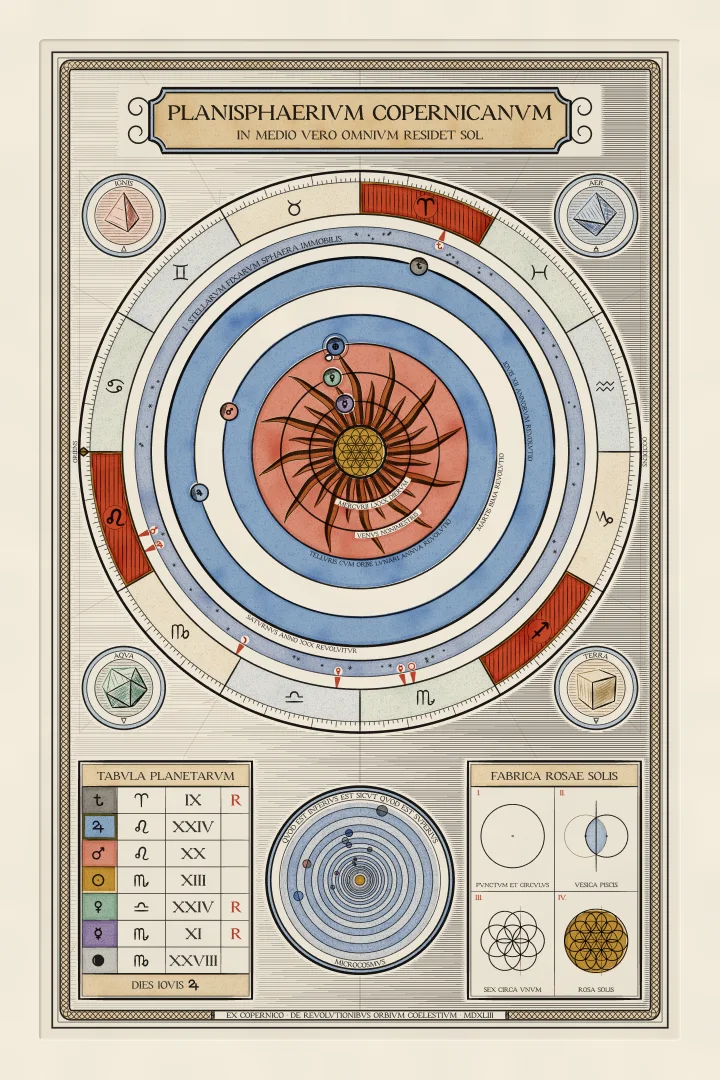
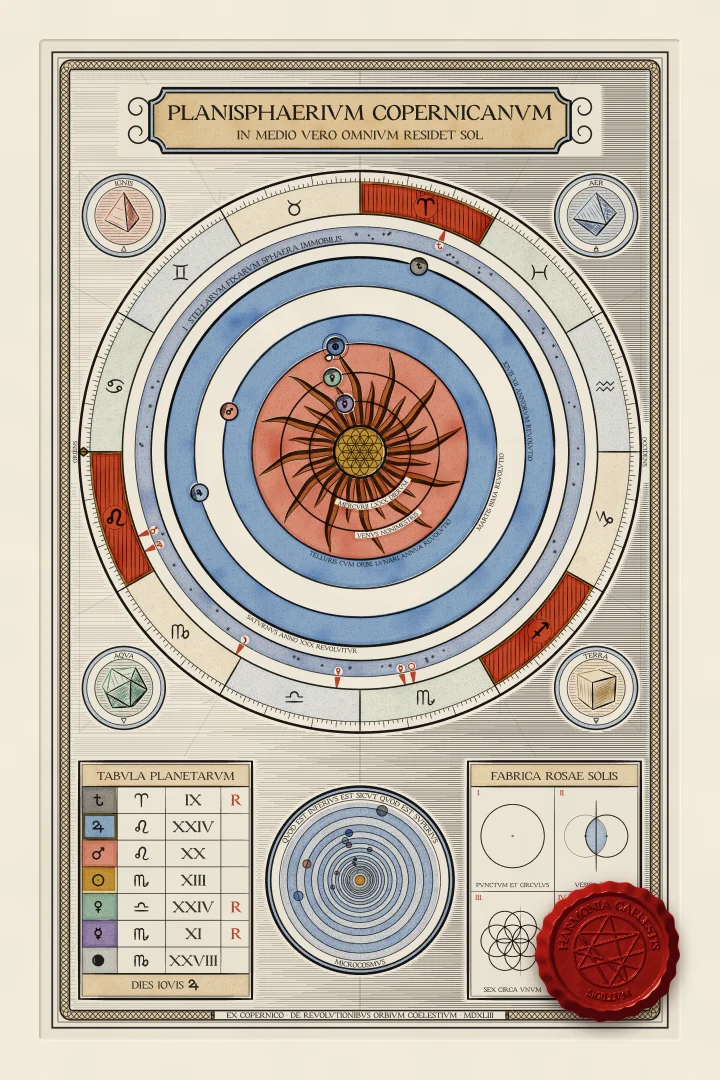
 These are close-ups of the medallion at the foot of every plate. Around its rim runs the Emerald Tablet’s own line, cut in Latin: QVOD EST INFERIVS EST SICVT QVOD EST SVPERIVS. In English: what is below is like what is above. Underneath is one word, MICROCOSMVS: the small world.
On an ordinary day the medallion holds the plate’s own world, drawn small. On the day of an eclipse, that eclipse appears inside it, drawn as it happens. An event in the sky above appears in the small world below.
The plate does what the line says.
Astrology, and the maps
 Astrology is one of humanity’s oldest ways of asking the same question. It looks at where the Sun, the Moon and the planets stand against the stars, and asks what that might mean for life down here.
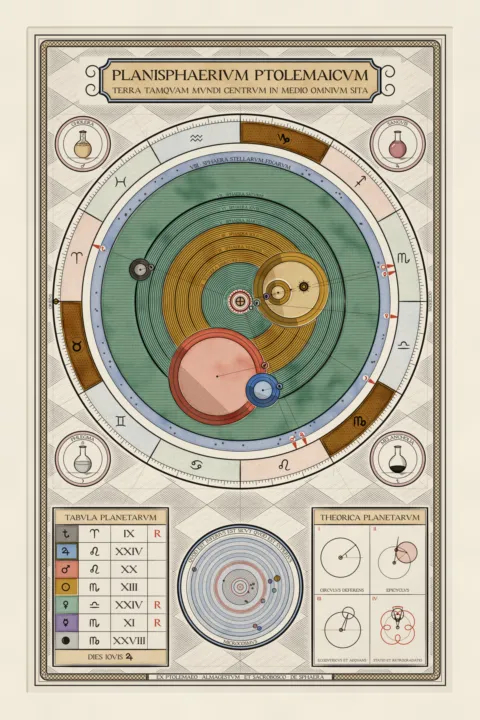
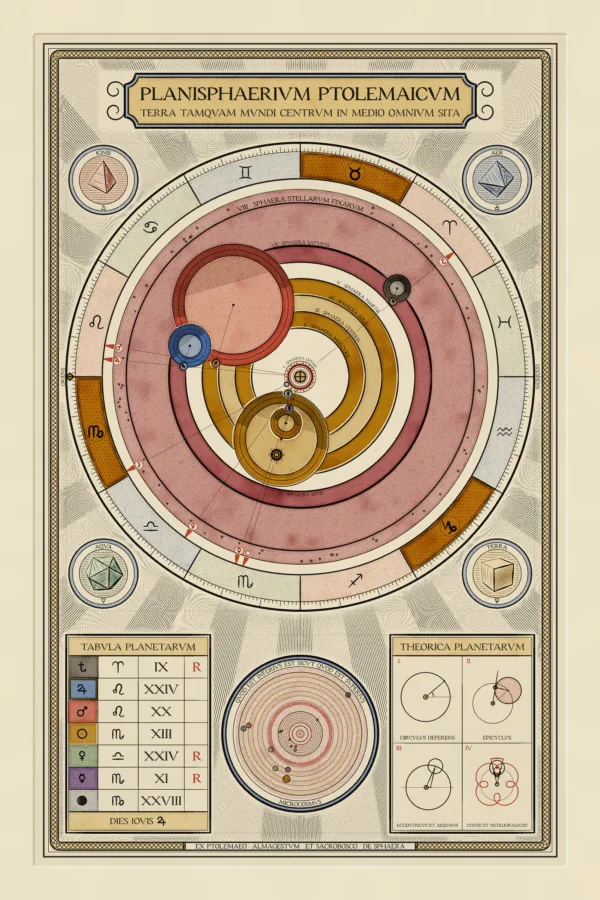
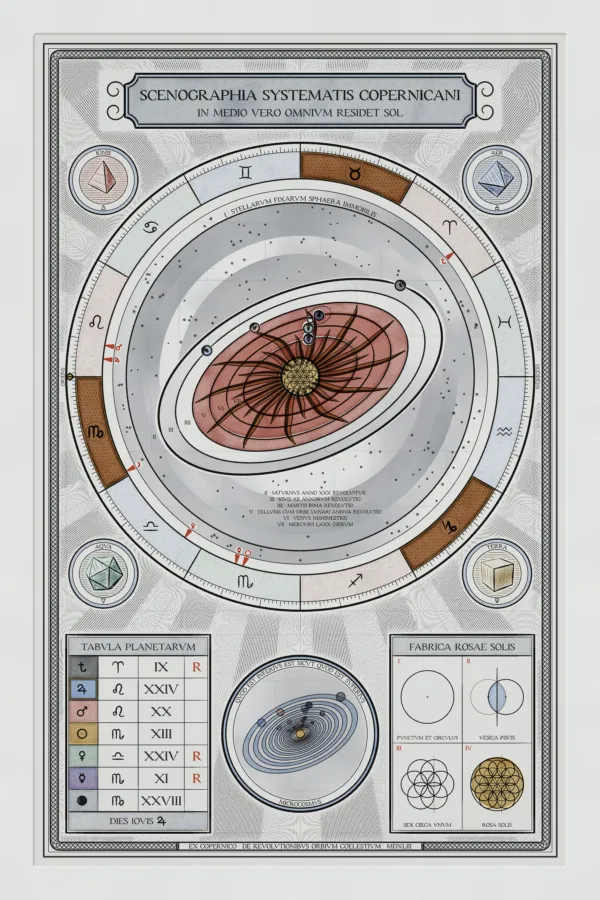
To read the sky, you first have to know where everything is. So people measured it, with great care, and drew it. Ptolemy and Kepler, whose pictures of the universe appear on these plates, both also wrote about astrology. For a very long time, measuring the sky and asking what it meant went together.
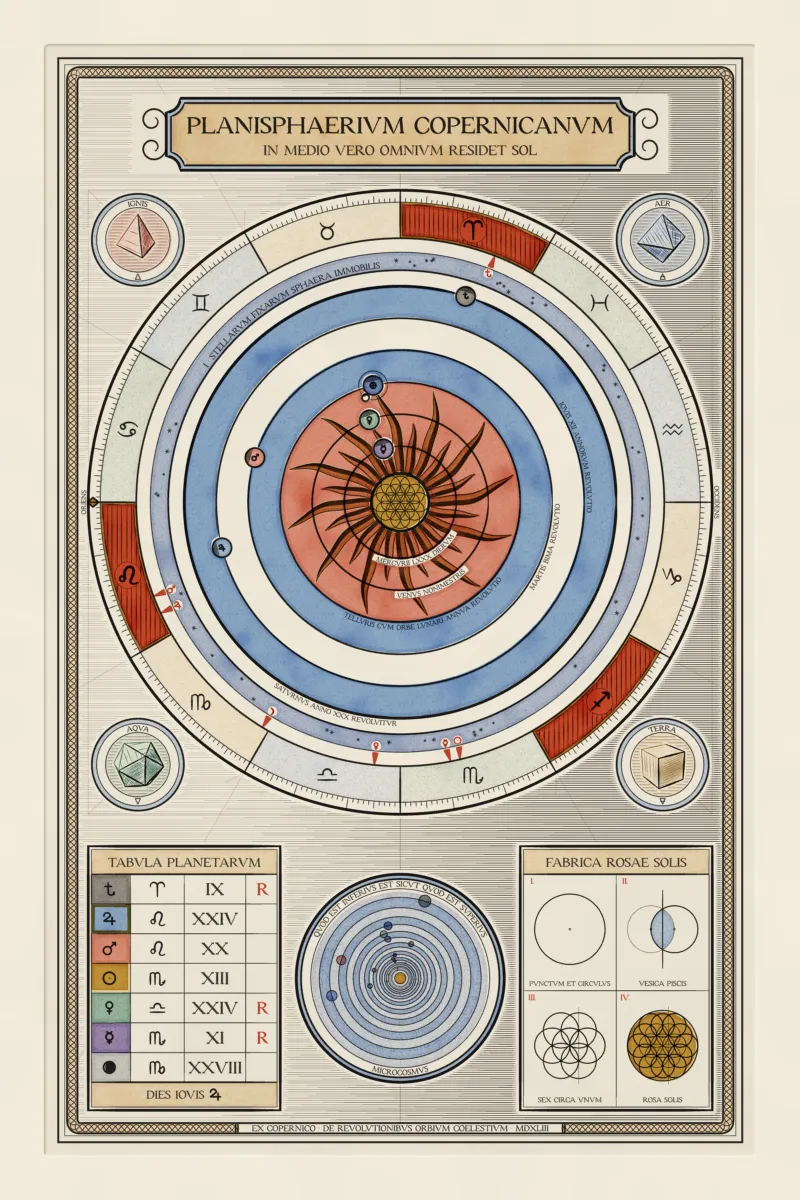
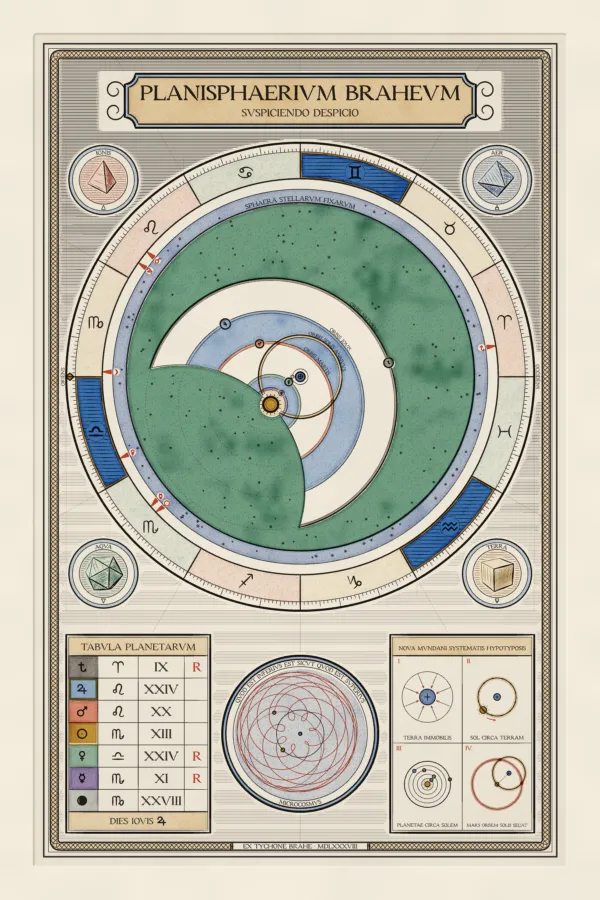
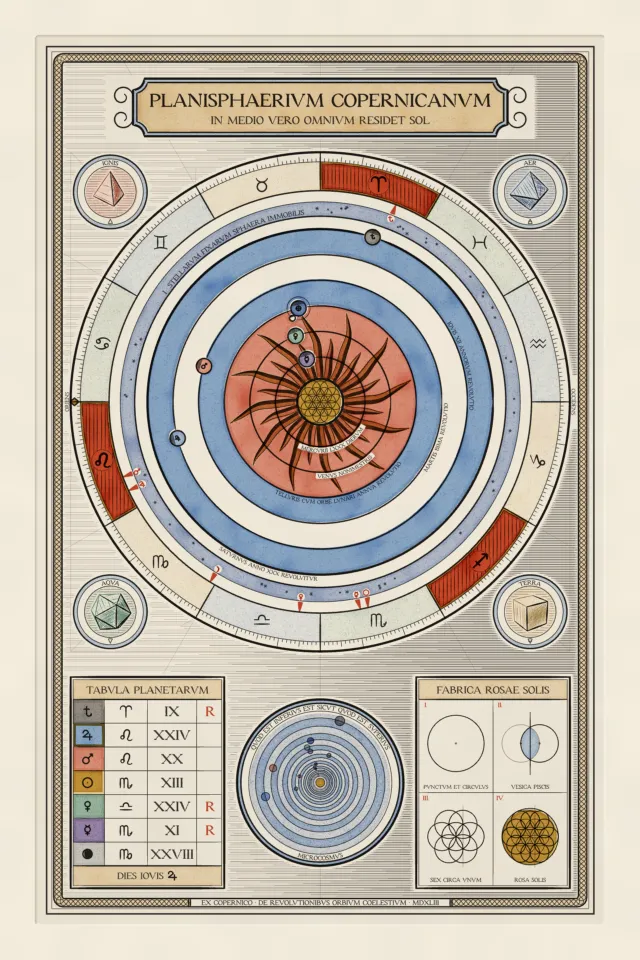
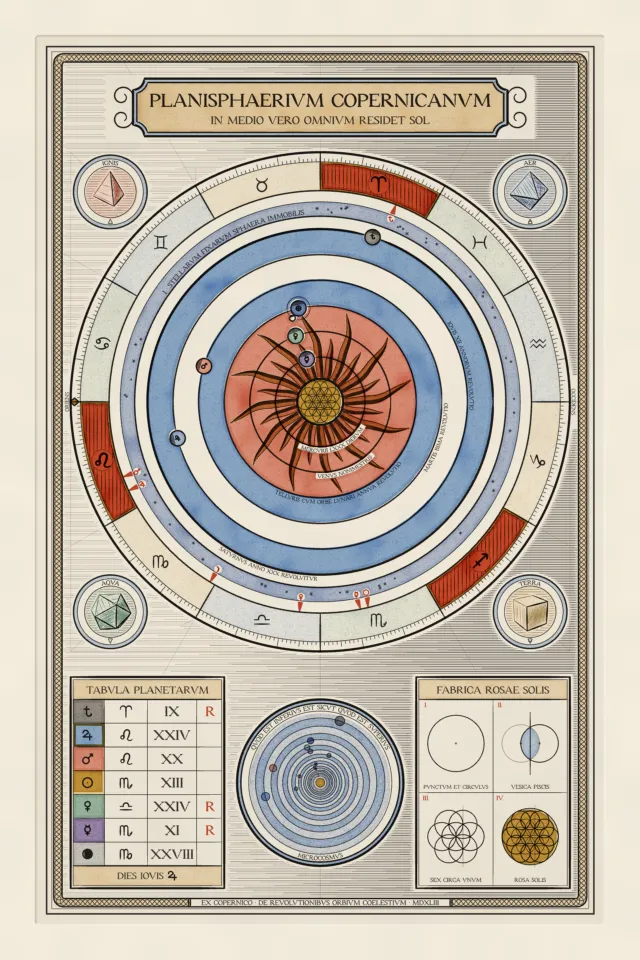
In 1660 a mapmaker named Andreas Cellarius published the Harmonia Macrocosmica, the “Harmony of the Great World”: an atlas of the heavens, printed from engraved copper plates, with many copies coloured by hand. It set rival pictures of the universe side by side, with the Earth at the centre, with the Sun at the centre, and with a design in between. These plates come from that tradition, and their lettering is drawn from his.
Why it still matters
 We know far more about the sky than those mapmakers did. We have walked on the Moon and sent machines past the planets. And people still stop in the street to look at a full Moon. They still cross the world to stand in the shadow of an eclipse. Knowing what the planets are made of has not ended the question of what they mean to us.
The sky is also the one thing every person who has ever lived has shared. The Moon you can see this month is the Moon the scribes of Babylon wrote down. Most of us now live under city lights and rarely look up. When we do, we remember that we live somewhere: on a world, among other worlds.
I’m making this project to connect people to the cosmos.
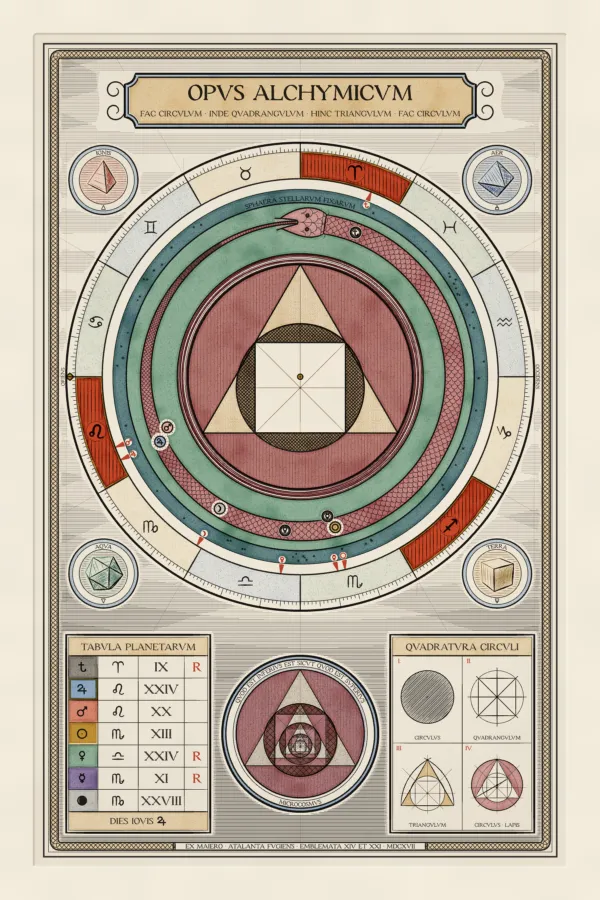
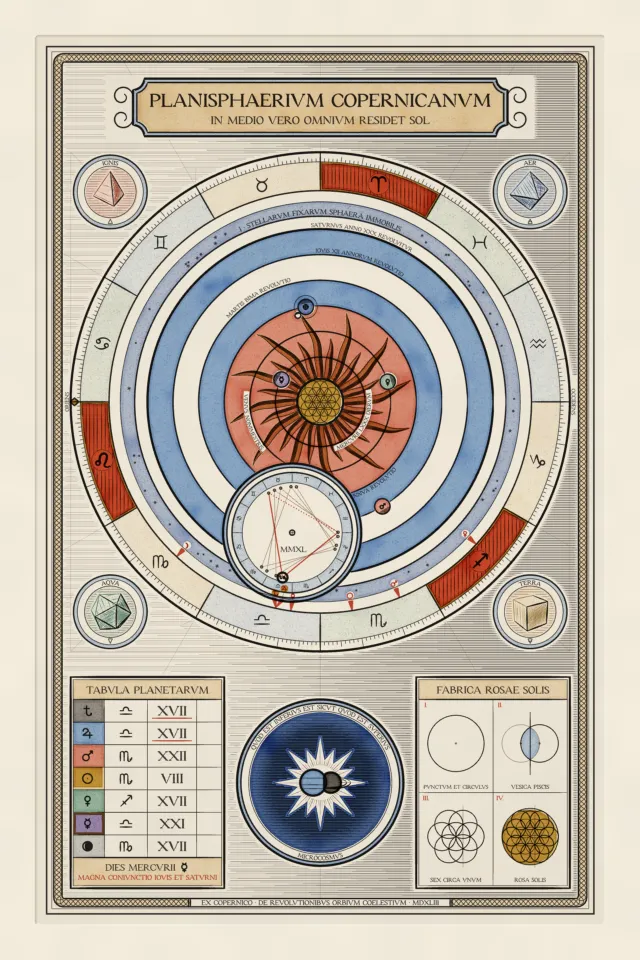
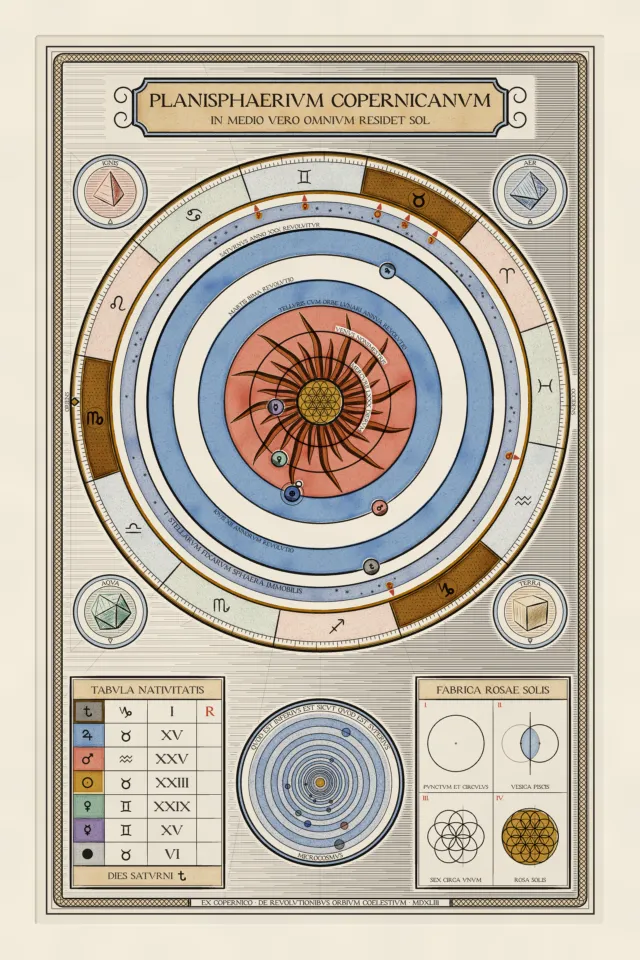
 I’m not asking anyone to believe that the stars decide anything. I’m asking you to look up, and to feel what people have felt when they looked up, from the beginning. Each plate is a map of the heavens in the old manner, with today’s real sky inside it. The planets on it stand where they truly are right now, and the plate moves with them, every day, on your wall or on your phone.
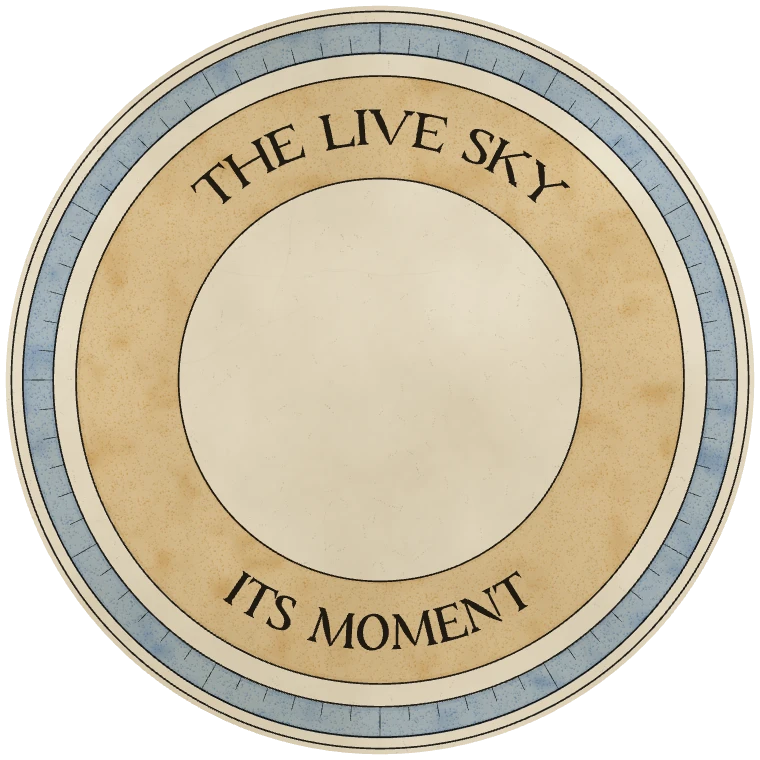
A plate can also hold one date that matters to its owner, set once and for good. A birth, say. The plate then keeps the sky above that person’s first day, beside the live sky of today. It is the same idea, made personal: the sky above, kept in the small world below.
Awareness Paradox